Skip to:


What’s the Difference Between Ice Cream Sticks and Ice Cream Bars?
Ever browse the freezer aisle looking for an ice cream bar, only to find yourself second-guessing what's actually in your hand? Is it a bar? A stick? Does it even matter?
Good news: you don't need a degree in frozen treat studies to figure it out. Generally, an ice cream bar is a handheld frozen treat made in a bar-style shape, while an ice cream stick usually refers to ice cream or frozen treats served on a stick.
Let's break down bars, sticks, and coated classics, so your next pick feels less like a guessing game and more like the easy answer it already is.
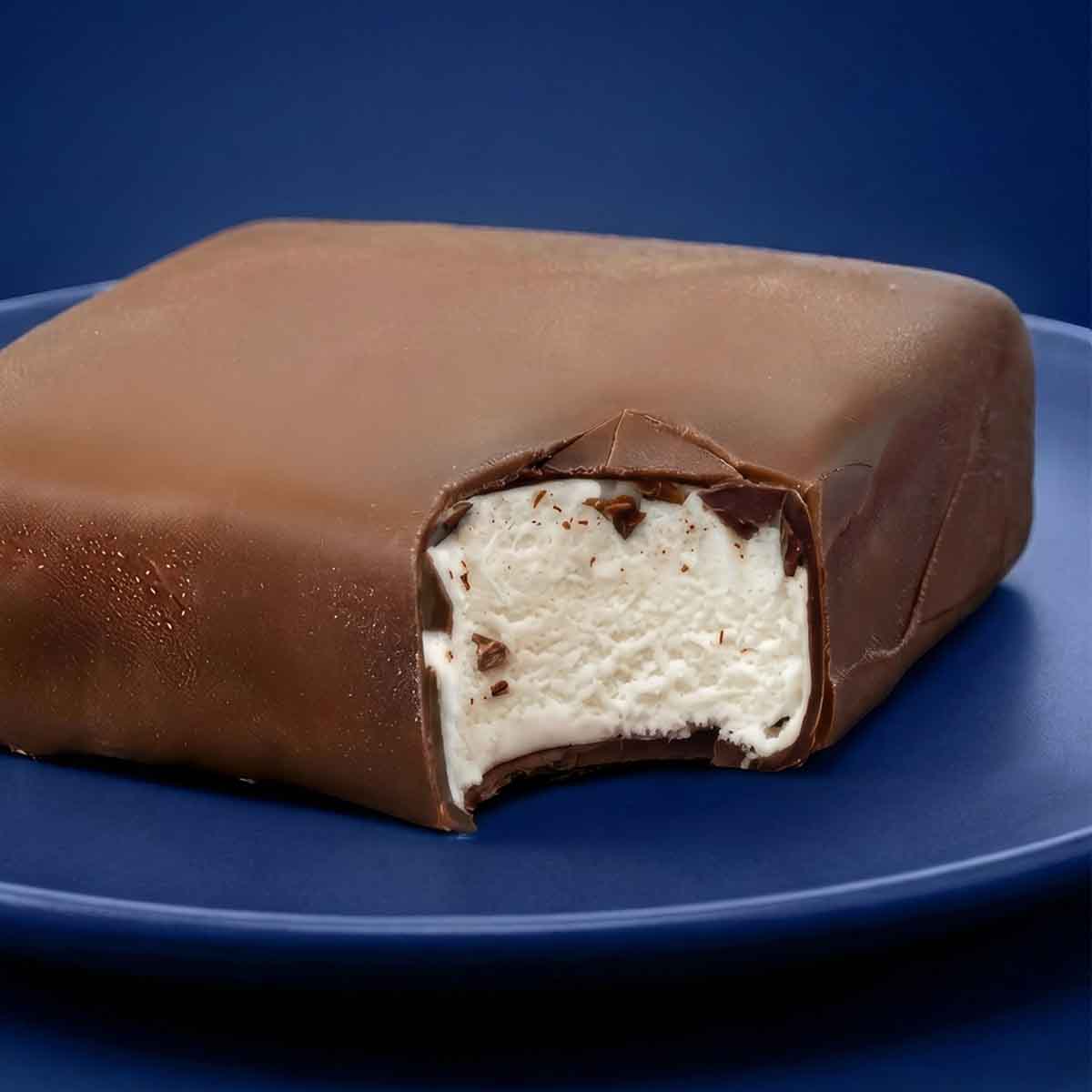
What Is an Ice Cream Stick?
Here’s where things get a little sticky. Yes, that pun was indeed 100% unavoidable.
An ice cream stick usually refers to a frozen treat served on a wooden or plastic stick. These options can include classic ice cream on a stick, coated bars, fudge-style treats, ice pops, and other novelty treats that are designed for one-handed eating. They all use the stick format, just from different corners of the frozen treat universe.
The phrase "stick ice cream" is also used pretty broadly, which is where the confusion starts. Some people use it for any frozen treat with a stick. Others mean a specific coated bar, where the stick and chocolatey coating work together as part of the eating experience.
So, the stick is really the clue. If it comes with a built-in handle, it probably belongs to this family.
Key Differences at a Glance
Still wondering which is which? Here's the quick version.
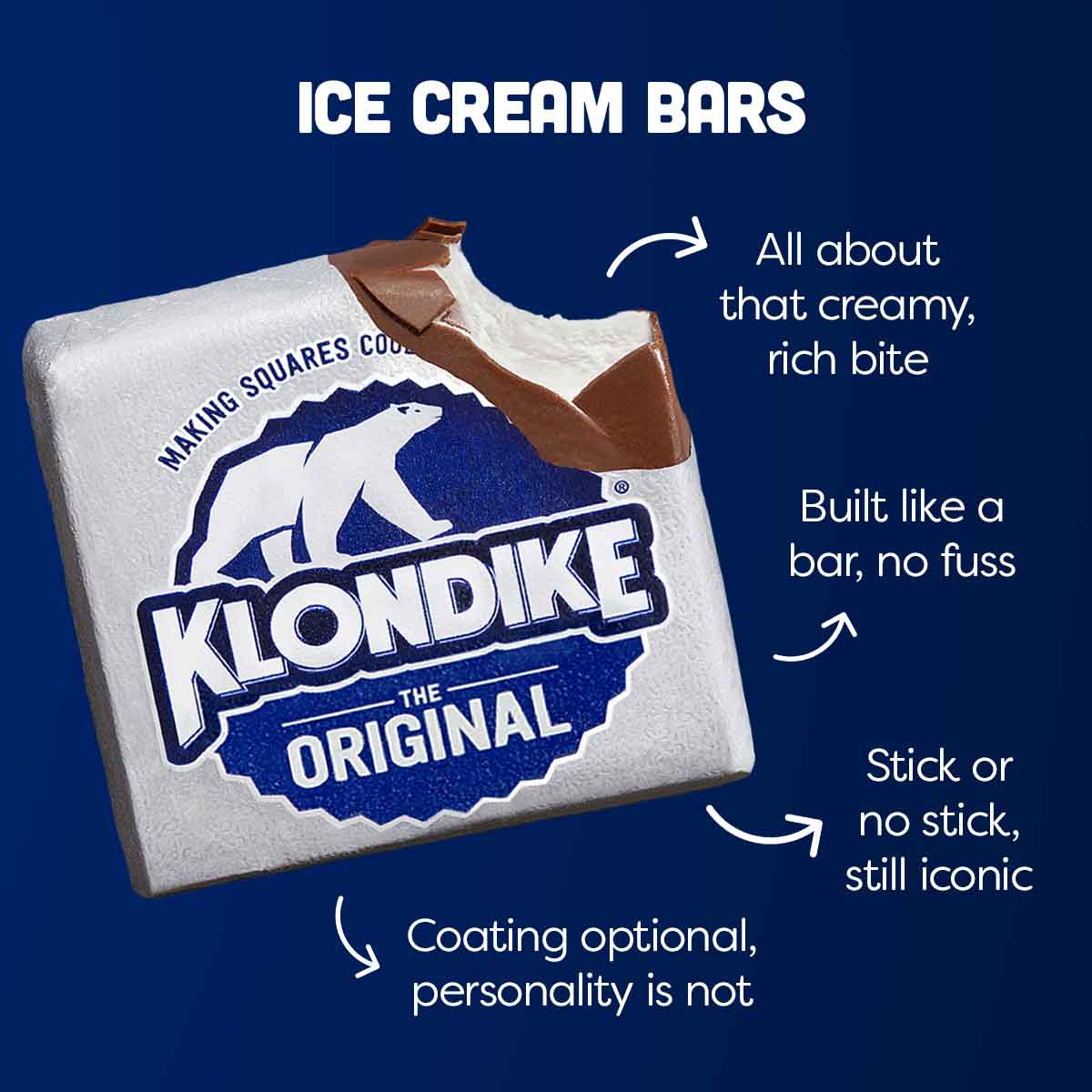
Ice Cream Bars
Usually shaped like a bar or square.
May or may not include a stick.
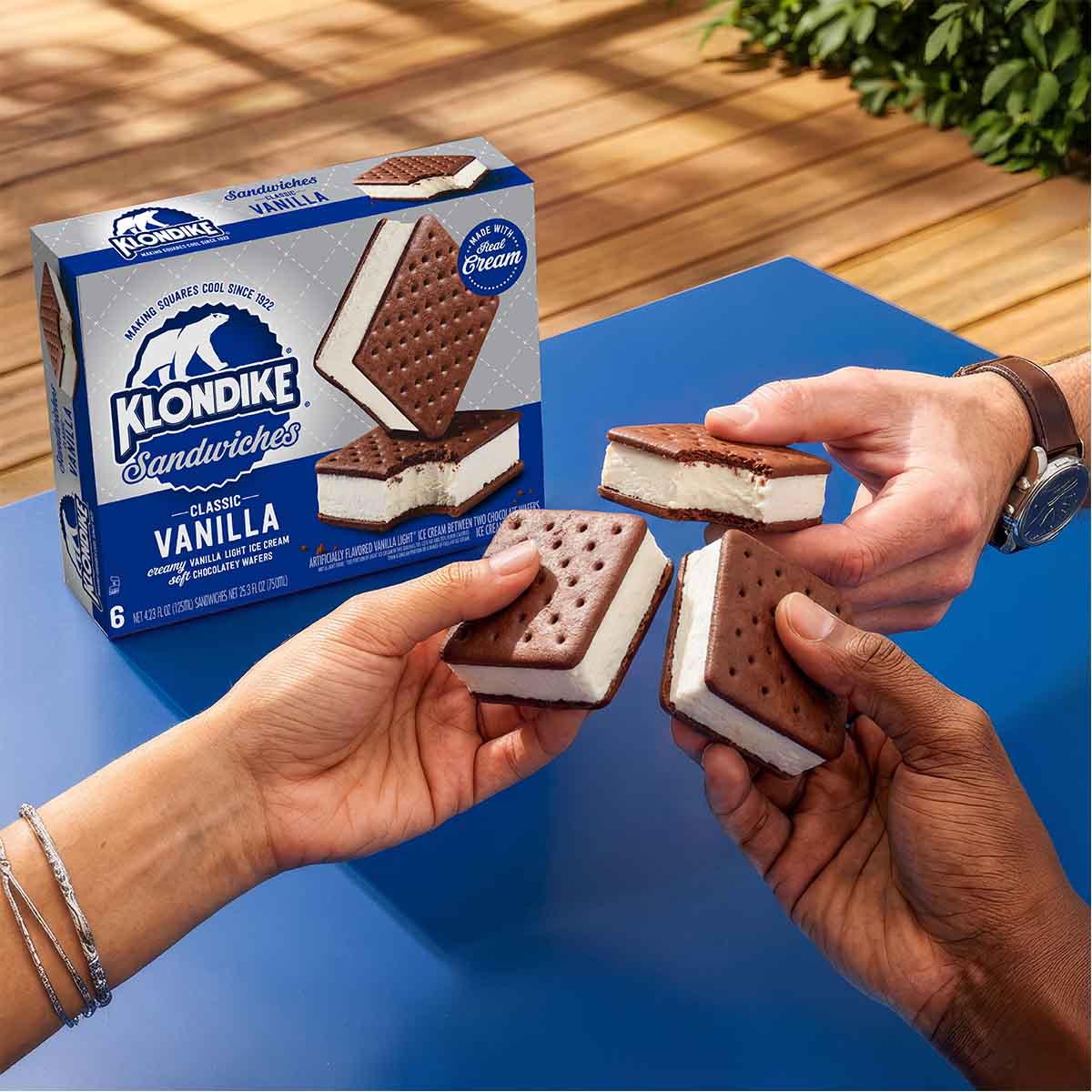
Can be coated, uncoated, or sandwich-style.
Often focus on creamy textures and rich flavors.
Ice Cream Sticks
Defined by the stick used as the handle.
Always served on a wooden or plastic stick.
Includes coated bars, ice pops, fudge bars, and other novelty treats.
Covers a wide variety of frozen treats with different textures and ingredients.
The easiest way to remember it? An ice cream bar describes the shape or style of the treat. An ice cream stick describes how you're holding it. Sometimes those overlap, and sometimes they don't. Mystery solved.
Bars with a Chocolatey Coating (A Category of Their Own!)
Other Frozen Dessert Formats to Know
Feeling star-struck? Lights, Camera, Klondike! Dessert Ideas for Movie Night
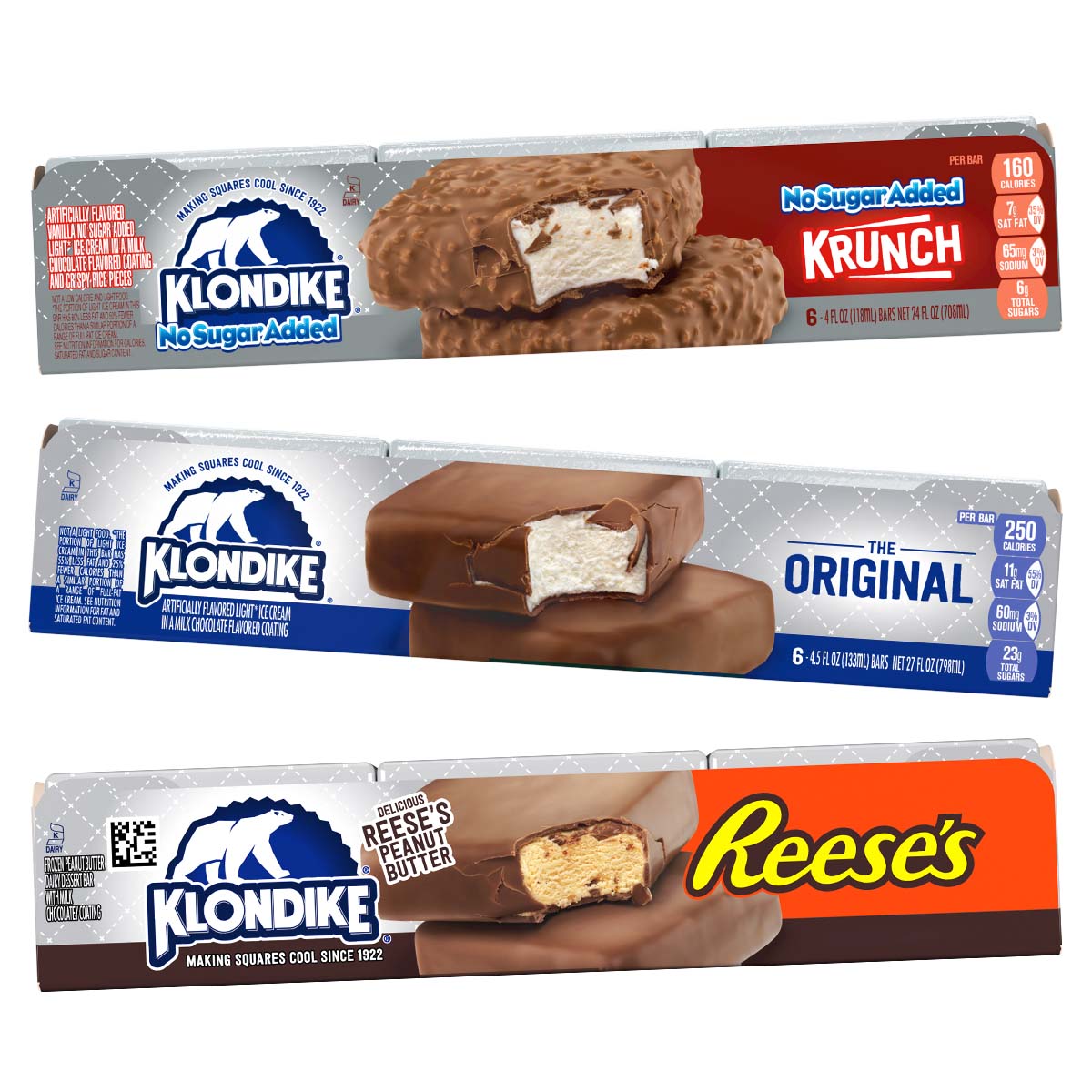
Klondike Ice Cream Bars (Find Your Fave!)
Still can't decide? That's not really a problem. It just sounds like a good excuse to keep exploring. And if Cookies & Creme happens to be calling your name today, check out our Cookies & Cream Frozen Dessert Recipes for Every Mood.
Now you know! The next time you're standing in front of the freezer wondering whether you're looking at an ice cream bar, an ice cream stick, or something in between, you'll know exactly what sets them apart.
More importantly, you'll know there's no wrong answer, only different ways to satisfy a craving. Plus, you’ll be able to find it very close to you with our handy store (and delivery) finder.
Find Your Next Favorite Klondike Bar
Life's too short for boring frozen treats. Discover the full lineup of Klondike bars and find the one that's calling your name.
FAQs
Whether a Klondike bar is gluten-free depends on the variety. Some products may contain wheat or other gluten-containing ingredients, while others do not. Always check the ingredient list and allergen information on the package before choosing a product if you need to avoid gluten.
The original Klondike Bar was introduced in 1922 by William Isaly, who founded the Isaly Dairy Company in Ohio in the early 1900s.
The number of calories in a Klondike bar depends on the variety. For example, the Original Vanilla Bar and REESE'S Bar each contain 250 calories, while the Double Chocolate Bar has 240 calories, the HEATH Bar has 230 calories, and the No Sugar Added Vanilla Bar contains 180 calories. Always check the nutrition label for the specific product you choose.
Related Products


- slide 1
- slide 2
- slide 3
- slide 4
- slide 5